
Separate Suffolk Assessed, Market, and Sale Values
In Suffolk County, a property value can mean three different figures. The town assessment roll lists an assessed value used for taxation. A market or full-value estimate adjusts for the local level of assessment. A sale price, by contrast, comes from a recorded transfer and reflects a past transaction, not today's guaranteed selling price. Before comparing any two numbers, check the label, date, town, and source.
| Value type | Meaning | Official record |
|---|---|---|
| Assessed value | Value placed on the annual assessment roll | Town assessor |
| Full or market value | Assessment interpreted through the applicable level or ratio | Assessment and state rate data |
| Last reported sale | Consideration associated with a transfer | Deed, RP-5217, SalesWeb |
Find Suffolk's Assessed Value on the Town Roll
Start with the parcel address in OpenGov. Save the full SCTM district-section-block-lot number. Match the situs, owner clue, and parcel details before reading any value. Note the roll year, and check whether the display separates land, improvements, total assessed value, taxable value, and exemptions. Parcel-card fields vary across Suffolk's ten towns. Rely on the actual town record instead of assuming every portal looks the same.
- Locate the physical parcel and copy its SCTM.
- Open the assessment entry for the correct roll year.
- Transcribe each value under its displayed label.
- Note exemptions separately from assessed value.
- Use the applicable town rate or ratio only for that year and jurisdiction.
Use Suffolk's Uniform Assessment Level Correctly
New York does not require property to be assessed at 100 percent of market value. A municipality sets its own assessment level. The state's equalization framework supplies the context around it. Suppose a town assessed at 43 percent. Dividing the assessment by 0.43 yields a full-value equivalent. That arithmetic is illustrative only, not the actual rate for every Suffolk town. Get the correct rate for the town and roll year. Never apply one town's figure to another. The result is still not a property-specific appraisal, because condition, improvements, rights, partial interests, and market timing escape a simple ratio.
Understand Equalization Rates and Residential Ratios
An equalization rate compares a municipality's total assessed value with its total market value. It serves state and intermunicipal purposes. A residential assessment ratio offers another reference point for qualifying residential comparisons. Neither figure promises what a home will sell for. They simply help explain why two tax jurisdictions can assess property at different proportions. Meanwhile, both can still share broader tax obligations.
Assessed value is the figure carried on the roll. Market value estimates likely worth under stated conditions, the assessment ratio expresses the assessed-to-market relationship, and a reassessment is a systematic review of roll values.
Use RP-5217 for Suffolk Reported Sale Price
The RP-5217 Real Property Transfer Report accompanies a deed filing in Suffolk County. It records transaction details, including the reported selling price. That figure can differ from market value. Related-party transfers, concessions, partial interests, and other unusual terms all distort it. Read the deed type and transfer context along with the number. New York's transfer-reporting page explains the county-clerk filing connection. The state's RP-5217 guidance treats the report as sale data rather than an appraisal.
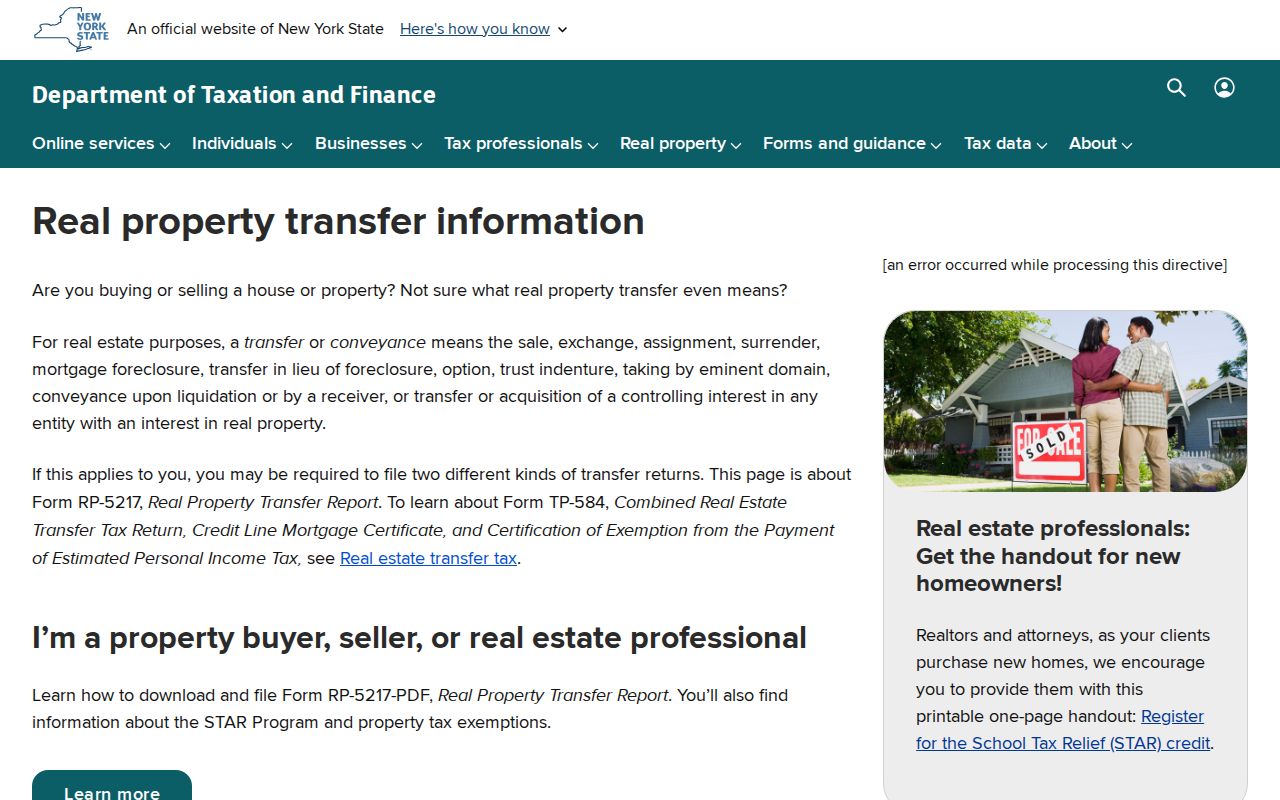
The transfer report is a sale-data source. It is not a substitute for an appraisal, and the reported price should be weighed as one input among several.
Sale Date and Suffolk Deed Date Can Differ
Sale date and deed date are different fields. The Suffolk County Clerk warns that a deed can take eight to ten weeks after closing to be recorded. New York SalesWeb updates weekly and covers ten years of transfers, yet state guidance warns that entries can lag by weeks or months. A careful comparison keeps three dates straight: sale, recording, and database access. Do not reject a valid transaction too quickly. The tax roll may still show a prior owner. The state sales database may not have caught up. Confirm the newest deed and the assessor's status. Revisit delayed data after its normal processing window.
Exemptions Change Suffolk Taxable Value, Not Sale Consideration
Exemptions like STAR can cut a parcel's taxable burden. They do not rewrite the price reported in the deed transfer. Nor do they cut the base assessed value. Read the roll columns carefully. Total assessment, exempt amount, and taxable assessment are distinct. A comparison that ignores exemptions can make two similar parcels appear to carry inconsistent taxes. The town assessor can explain the roll entry and local options. New STAR applicants generally follow the state credit route, while other exemption programs set their own proof and deadline rules.
Challenge a Suffolk Assessment through the Roll Process
A value dispute starts with the assessor. The deed record is not part of this process. March 1 is generally taxable status date. Tentative rolls appear around May 1. Grievance day is the fourth Tuesday in May. RP-524 states the complaint and grounds such as unequal, excessive, unlawful, or misclassified assessment. The state appeal page describes the Board of Assessment Review, Small Claims Assessment Review, and other review paths.
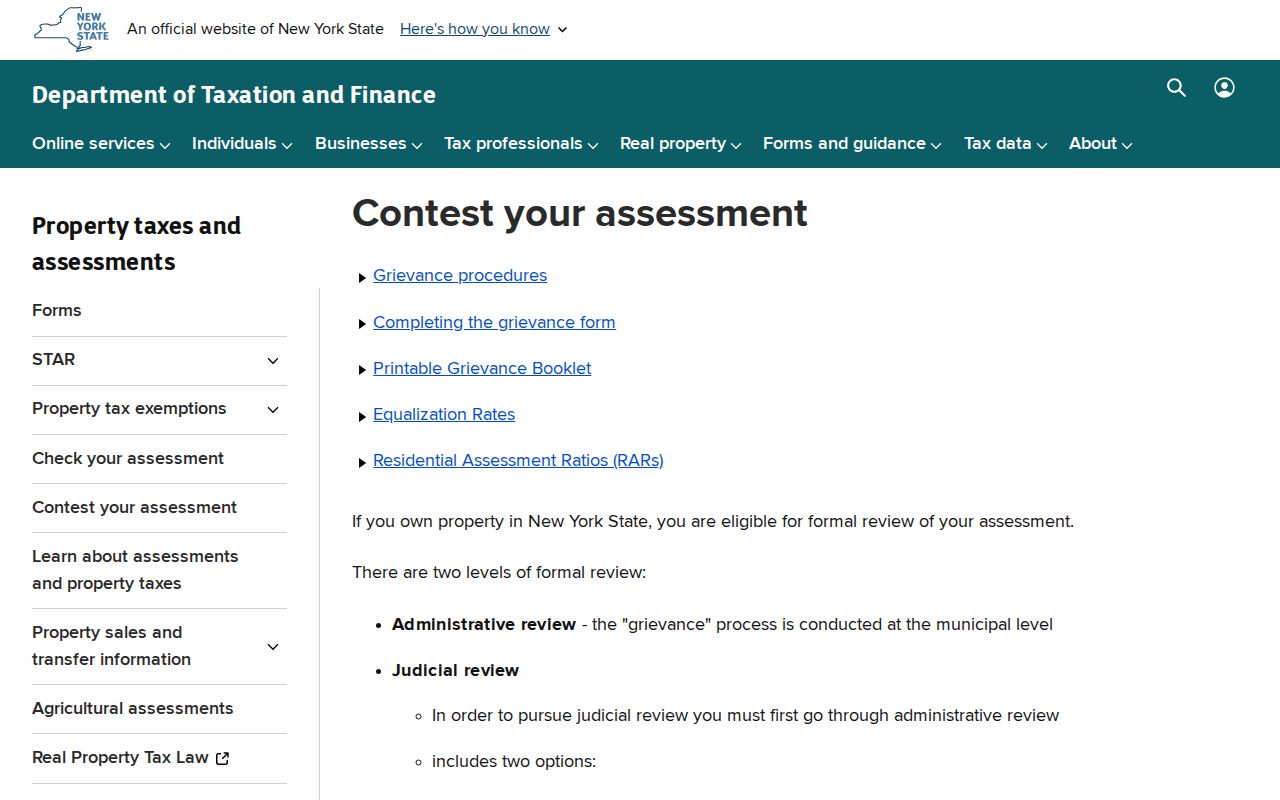
An assessment challenge targets the roll value itself. It is separate from disputing taxes already levied or disagreeing with a recorded sale price in Suffolk County.
Suffolk GIS Adds Parcel Context, Not an Appraisal
Suffolk GIS can confirm parcel identity, mapped acreage, land-use attributes, municipal district, and surrounding geography. Historic aerials can also reveal visible development change across years. Such context helps, but GIS never inspects interiors or measures condition. It does not analyze comparable sales. Nor does it settle legal boundary rights. Even mapped acreage deserves a check against the deed and survey when precision matters. Use GIS to guard against mismatched parcels. Then return to the assessment source. Return to the recorded transfer and any professional valuation the decision requires.
What a Suffolk Property Value Does Not Tell You
Suffolk County assessed value exists to feed the tax roll, not to predict the market. One reported sale only captures a single deal. A full-value figure is just an administrative ratio applied to that assessment. So none of these numbers promises what a buyer would actually pay, what rebuilding would cost, or what a lender will accept. And none tells you whether the title is clean. Suffolk County property records can also trail reality. Ownership changes and improvements take time to reach the tax roll.
Value limit. Suffolk assessed value is not a current appraisal and should not be presented as a guaranteed market price.
The Values on a Suffolk County Property Record
| Value | What It Is | Where |
|---|---|---|
| Assessed value | ||
| Market / appraised value | ||
| Last sale price | ||
| Land vs improvement |
Looking Up a Suffolk County Property Value
- Assessed value
- Market / appraised value
- Level of assessment
What a Suffolk County Assessor Value Is Not
Value vs price.