
Start with Suffolk's Assessed Owner Record
For any Suffolk parcel, the assessed-owner field on the right town roll is the fastest first clue. It points to who holds the property. Reach it from an address. It also hands you the SCTM number. That tax-map identifier is what nearly every other Suffolk County records source will ask for. Treat it as a lead, not proof of title. Ten separate towns keep their own assessment rolls here. The County Clerk handles recorded deeds. A dependable current-owner check pulls from both offices and notes the date behind each result.
Five items are worth writing down before you go further. Parcel: copy the complete district-section-block-lot value. Assessed owner: transcribe the name exactly as printed. Mailing name: keep it distinct from the assessed owner. Roll year: note the source date. Recorded confirmation: cite the newest deed's date and liber-page reference.
Read Assessed Owner, Mailing Name, and Situs Separately
Three fields answer three different questions. The assessed owner belongs to the assessment record itself. The mailing name tells you who receives the tax correspondence. The situs is simply where the parcel sits physically. A lender, trustee, estate representative, or management address can make these fields disagree without anything being wrong. The SCTM keeps the whole property search anchored to one parcel while you compare them.
| Displayed item | Meaning | Do not assume |
|---|---|---|
| Assessed owner | Name on the roll | Instant title update |
| Mailing name | Statement recipient | Fee ownership |
| Situs | Physical location | Legal description |
| SCTM | Tax-map identity | Surveyed boundary |
Check How Current the Suffolk Town Roll Is
An annual assessment roll follows its own taxable-status and filing calendar. March 1 is generally taxable status date. Tentative rolls appear around May 1. Grievance day commonly lands on the fourth Tuesday in May. Those milestones explain why ownership and mailing updates never behave like a live transaction feed. No guaranteed town-by-town refresh interval exists. So call the assessor and ask whether a recorded change is pending before concluding a Suffolk roll is stale. Note: record the roll year and access date in any written conclusion. A parcel may have been recently split, merged, transferred, or renumbered. RPTSA and the assessor may still be processing related updates on different schedules. What one office shows first, the other may lag by weeks.
Let Suffolk's Newest Deed Resolve a Stale Roll
Pull up the County Clerk kiosk and enter the full SCTM. Filter so deeds stand apart from mortgages and liens. The newest deed matters most here. Match its grantee and legal description against the assessment parcel before you trust any name. Some results need the full document read. Corrections, quitclaims, trustee's deeds, fiduciary deeds, and partial-interest transfers all look alike in a result row. A name alone, without document context, settles nothing about who owns a Suffolk County parcel. See the official source represented in this Clerk search capture.
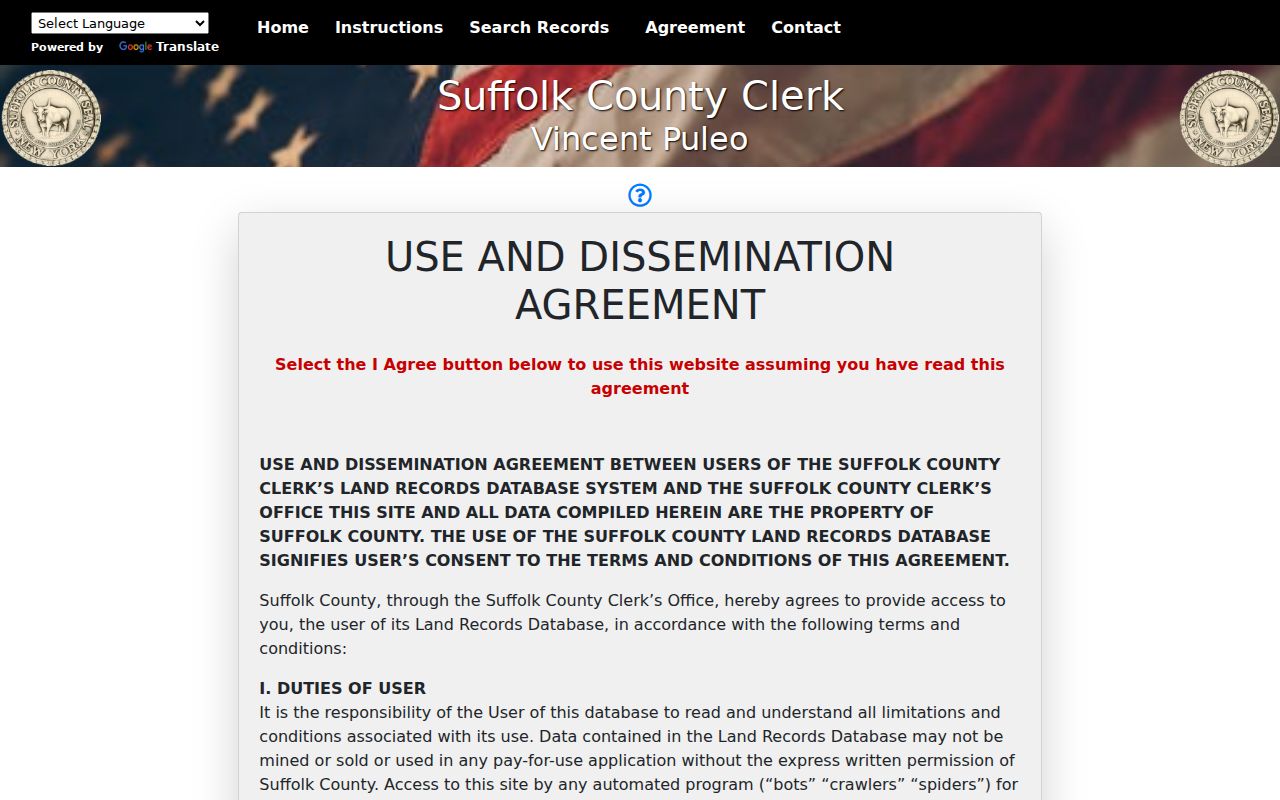
The kiosk handles property, tax-map, party-name, and liber-page searches that can converge on the same current deed for a parcel.
Allow for the Clerk's Recording Warning
Suffolk County deeds move slowly. The Clerk warns that recording can lag eight to ten weeks behind closing. Meanwhile the old owner of record still sits in the public index. The assessment roll carries the same name too. Closing paperwork may show a sale the custodian has not accepted or indexed yet. So qualify any owner result as current only through the search date. Recheck once the recording window passes.
When the deed finally appears, capture the details that matter. Record the recording date, the liber and page or document identifier, and the document type. Also note how the grantee is worded. Then ask the town assessor when the tax roll and mailing record will catch up. That framing explains the gap without calling either office wrong.
Use the Exact SCTM for a Suffolk Condominium Owner
Condominiums break the usual rules. The Suffolk County Clerk requires the exact tax-map number. A condo cannot be searched by address like other parcels. Pull the unit's SCTM from the tax record, assessment record, closing papers, or RPTSA. Searching only the building address can tangle common elements, sponsor parcels, and individual units together.
After you find the deed, verify the unit designation and the legal description itself. Matching the owner's name alone is not enough. One person or entity may hold several units. The postal unit format can differ from the recorded description in the deed records.
Interpret Trustees, Fiduciaries, and Entities
A current deed may vest an interest in trustees. It can also name an executor, an administrator, or a business entity. Copy the capacity terms exactly as they appear. The assessed roll may shorten them. A tax mailing line may even show an agent instead. New York's business-entity inquiry can confirm details about a public entity. Surrogate's Court records can explain estate authority in Suffolk County. Neither route should be used to invent an undisclosed beneficial owner.
Owner of record is the person the latest recorded deed points to. A trustee holds title to Suffolk County real estate in a fiduciary role rather than for personal benefit, so the deed names the trust arrangement. A fiduciary deed works differently: it transfers property under authority granted by an estate or similar legal power.
Read the Deed's Liber and Page Trail
The current deed often cites the instrument through which its grantor acquired the property. That earlier liber-page reference is the bridge to former owners. It also confirms that the current instrument fits the expected chain of title in Suffolk County. As you move between documents, compare names, parcel references, filed-map details, and legal descriptions.
Suffolk's online land-document imaging generally begins in 1987. Older chain references may therefore lead to a physical book, a counter search, or a copy request. The later deed may still be online. A missing old image does not break the recorded chain. The deed records still stand on paper.
Review Mortgages, Satisfactions, and Liens Separately
Ownership and encumbrances answer different questions. A mortgage does not make the lender the fee owner. A satisfaction can release a referenced mortgage. A lien or lis pendens can affect the property without transferring title at all. The Clerk kiosk places these records in separate categories. Review each relevant table in Suffolk County rather than treating every name hit as an ownership transfer.
An old index hit may lack an online image. Coverage dates differ by record type. Suffolk's lien index reaches back much farther than its online lien-document images. Use the index citation to request the underlying record from the recorder's holdings.
Protect the Confirmed Owner with HOWL Alerts
Suffolk County offers the Homeowners Watch List. It gives owners a warning after new recordings. Enrollment is simple. The county mails a PIN to the property's street address. That PIN activates email notices of later recorded activity. A deed can still be presented for recording without the owner's permission. So an owner check pairs well with an alert standing guard afterward. See the official Homeowners Watch List page.
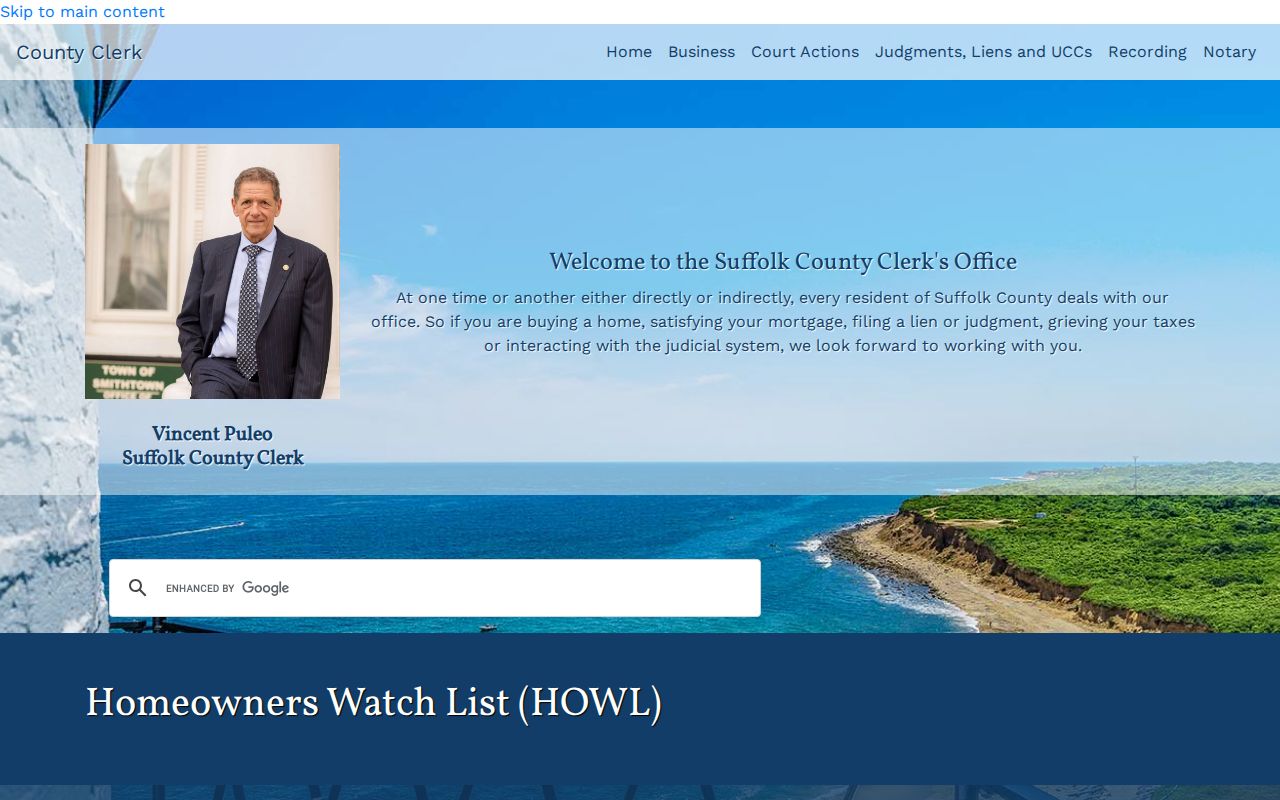
An alert signals that a document deserves a fast review, but it does not prove fraud on its own, and it does not undo a filing.
State a Suffolk Current-Owner Finding with Limits
State a Suffolk current-owner finding with its limits spelled out. A responsible result identifies the parcel. It cites the assessed-owner source and its date. It also names the latest recorded deed that applies. The result discloses a recent-closing lag, an entity's capacity, or an unresolved legal-description mismatch. Public property records reveal no title opinion. They also miss unrecorded claims and hidden beneficiaries.
Verify before relying. For a transaction or dispute, obtain the recorded document and use qualified title or legal review.
What the Suffolk County Current Owner Record Shows
| Owner of Record | |
|---|---|
| Vesting / Tenancy | |
| Mailing Address | |
| Situs Address | |
| Deed Reference | |
| Ownership Since |
Confirming the Current Owner in Suffolk County
- to confirm vesting]
- Owner of record
- Vesting
- Registered agent
Reaching a Suffolk County Property Owner
Lawful use.