
Read Suffolk County Property Tax Records by Custodian
Suffolk County property tax records have no single assessor. Ten towns each keep their own assessment roll. Town assessors set parcel values and exemptions. They also answer assessment questions directly. The town receiver, meanwhile, collects the current tax bill. Delinquent taxes move to the Suffolk County Comptroller, which handles tax liens and redemption. County OpenGov search tools give the public a convenient route into this data, though the responsible office still depends on whether the question involves an appraisal, a current bill, or an older lien.
| Tax record | What it shows | Responsible source |
|---|---|---|
| Assessment roll | Assessed owner, parcel, value, taxable status, exemptions | Town assessor |
| Current bill | Levies, installments, balance, payment status | Town receiver of taxes |
| County tax lien | Delinquency, notice, redemption status | Suffolk County Comptroller |
| Parcel reference | PIDN and district-section-block-lot identity | RPTSA and OpenGov |
| Reported transfer | Sale data associated with RP-5217 | County Clerk and New York ORPTS |
Keep the SCTM number with every inquiry. The Suffolk County Tax Map ties everything together. A mailing name can change, a street can carry alternate spellings, and a fresh deed can reach the County Clerk before the assessment roll catches up. That parcel number connects the roll, the bill, the map, and the recorded transfer without making those systems agree on spelling.
Search Suffolk Property Tax by PIDN, Parcel, or Address
The county OpenGov interface splits its search into separate fields: PIDN, MAP/Parcel, location address, street name, and mailing name. Start with the PIDN. The complete map number works just as well. Enter the situs location, not the tax-mailing address. Street-name mode helps when the exact house number is unclear or you are comparing parcels on one block. Mailing-name mode finds the statement recipient, but treat it as a mailing detail rather than proof of title.
- Search the location address and open the best matching tax result.
- Copy the PIDN and complete map or SCTM value exactly as displayed.
- Compare the assessed owner and mailing name rather than assuming they mean the same thing.
- Note the roll year, tax period, and any inactive-record warning.
- Contact the appropriate town assessor or receiver when the public result lacks the current detail needed.
The official Suffolk County OpenGov portal displays the tax and payment fields available for each parcel. Review the county's OpenGov tax search.
The displayed fields tell the story. An exact parcel identifier beats one spelling of an address or an owner name, because Suffolk's records stay linked through the number rather than the wording.
Distinguish the Assessed Owner from the Tax Mailing Name
A Suffolk assessment roll lists an assessed owner. The tax account carries its own mailing name and mailing address for delivery. The two often match. Sometimes they do not. A trustee, estate representative, management company, or lender may receive the bill, so read all three fields separately and confirm any claimed ownership change in the most recent recorded deed.
Four fields carry the distinction. Assessed owner: the name on the assessment roll; mailing name: the addressee for tax correspondence; situs: the physical property location; PIDN/SCTM: the parcel key that links the Suffolk records.
A new buyer may reach the Clerk index first. The roll lags behind. Suffolk's Clerk warns that a deed can take eight to ten weeks after closing to be recorded. The town roll follows its own calendar. When dates conflict, write down when each source was dated, and ask the town assessor whether a pending change has been processed.
Suffolk's Assessment Calendar Controls the Roll
New York's real-property calendar sets the rhythm. March 1 is generally taxable status date, the point when ownership and exemption status are measured for assessment purposes. Tentative assessment rolls follow around May 1. Grievance day is commonly the fourth Tuesday in May. Always confirm the operative year with the responsible town. Those dates explain why a tax record is a snapshot rather than a continuously rewritten ownership ledger.
The tentative roll invites a first look. An owner can inspect the parcel entry before the final roll is filed. Compare the property description, assessed value, exemptions, and owner name against the deed and parcel map. A factual correction is not a valuation complaint. Bring the evidence the problem actually calls for. The assessor handles roll data, while a formal complaint goes to the local Board of Assessment Review on the prescribed form and schedule.
Use RP-524 for a Suffolk Assessment Complaint
RP-524 is New York's assessment complaint form. It asks for parcel identification, owner information, a claimed value, and the ground for review, which may be unequal, excessive, or unlawful assessment, or misclassification. Evidence strengthens the filing. Supporting sales, an appraisal, photographs, income information for appropriate property, or proof of a factual error helps the Board of Assessment Review understand the requested change.
The state assessment-review page maps the paths. It shows the administrative route first, then later judicial options. See the New York assessment-review guidance.
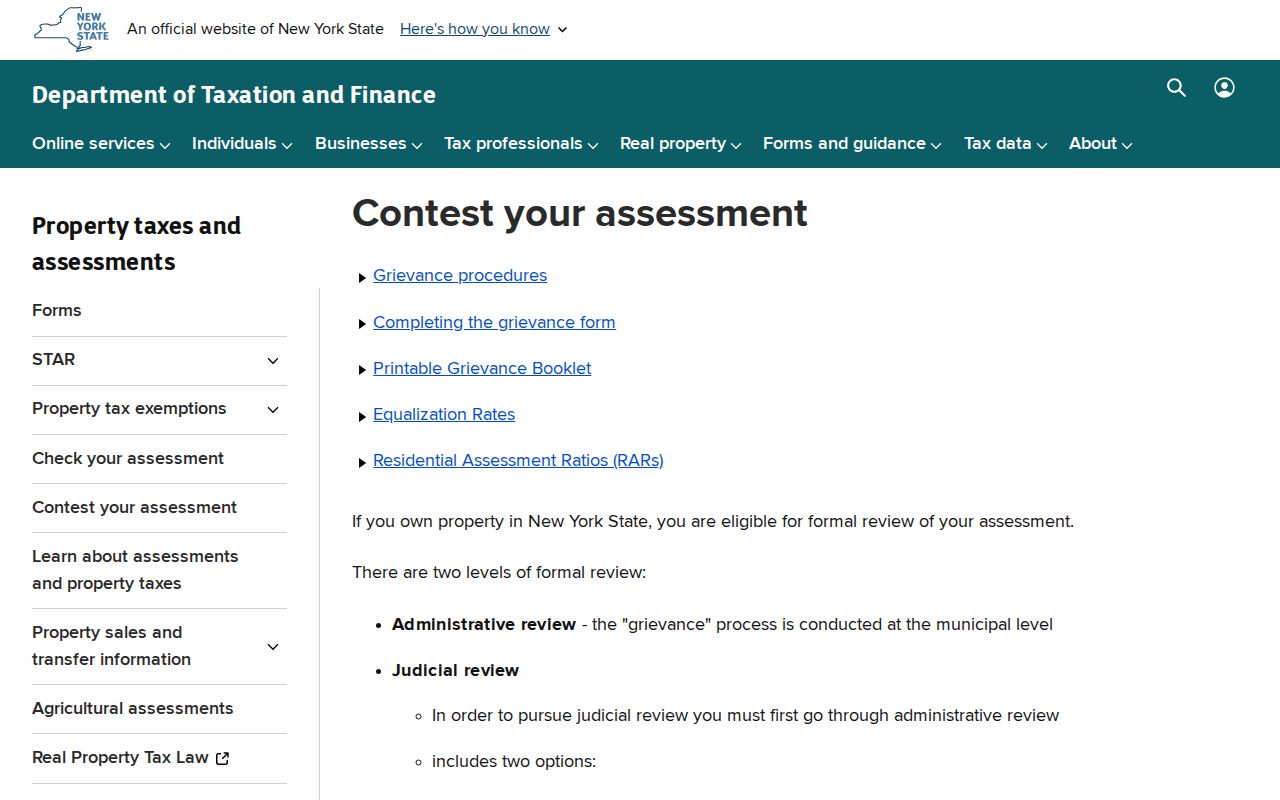
The local review costs nothing. Later Small Claims Assessment Review or court procedures carry their own eligibility and filing rules.
Equalization Rates Put Suffolk Assessments in Context
An assessed value is not a market value. New York uses equalization rates to relate a municipality's total assessed value to its total market value, and residential assessment ratios offer another reference for homes. A quick example shows the math. If a hypothetical roll were set at 43 percent of market value, dividing the assessment by 0.43 would indicate a full-value figure. That conversion describes the scale of the roll. It does not appraise one house.
Use the rate for the town and roll year shown on the record, never one from a different year. Another Suffolk town's rate will not fit either. Condition, property class, exemptions, partial interests, and market timing can all make a simple conversion incomplete. A sale decision needs more. A current appraisal and comparable-market analysis answer questions the tax roll was never designed to resolve.
Current Suffolk Tax Bills Begin with the Town Receiver
Towns collect their own current taxes in Suffolk County. The receiver of taxes for the parcel's town handles collection after the assessment and levy produce a bill. Check the tax year on any statement. The installment, balance, and payment posting matter too. A receipt proves a payment reached the account. It does not prove ownership on its own. When a property changes hands, compare the bill against closing adjustments and the recorded deed rather than treating the statement addressee as the owner of record. Delinquency follows a different path. Suffolk County's Comptroller runs the county tax-lien sale and redemption functions once the local collection stage ends. Redemption periods differ; 12-month and 36-month contexts both appear, depending on the property and the governing process. Because a tax deed carries serious consequences, request the parcel-specific notice and deadline directly from the Comptroller instead of inferring one from a general summary.
STAR and Other Exemptions Change Taxable Burden
Exemptions shrink the taxable burden without touching the deed consideration or the physical parcel. STAR is the best known. New STAR applicants generally use the state credit program. Town assessors still process most other exemption applications and enter the results on the roll. Veteran, senior, disability, agricultural, and other programs each carry their own authority, proof requirements, deadlines, and local options. Read the roll before drawing conclusions. It shows which exemption applies and for which year. An exemption missing from one public display may be pending, denied, expired, or simply tied to another roll. Ask the assessor about the status. A higher or lower bill does not prove a change in market value, and no exemption rewrites the sale price reported in a transfer filing.
Compare Suffolk Tax Data with RP-5217 Sales
Every New York transfer carries an RP-5217 Real Property Transfer Report. It captures the reported sale price. The sale date and the deed-recorded date are distinct fields. They may not match. SalesWeb offers ten years of transfer data and updates weekly, but weeks or months can pass between the transaction, the reporting, and public display. Judge each record with its date and source intact. For the filing context, review the state transfer-reporting page.
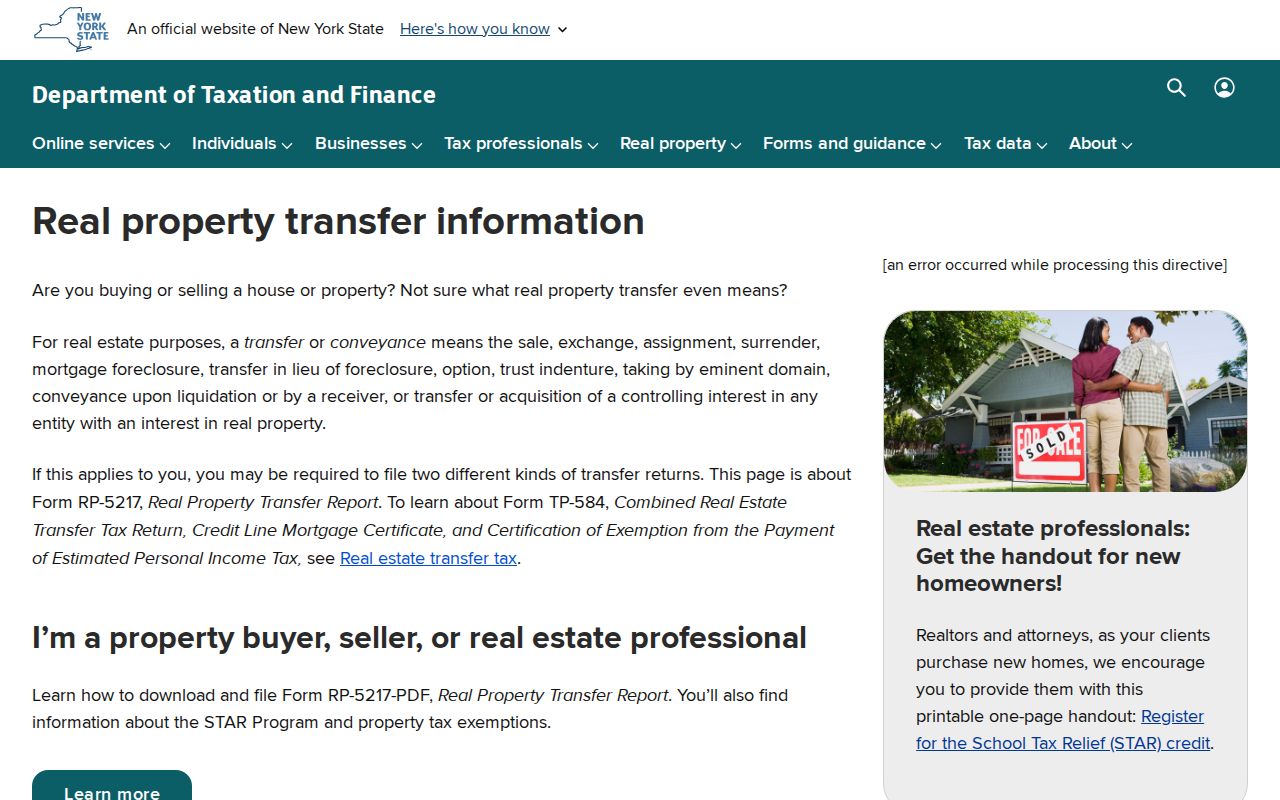
That separation matters. Comparing the RP-5217 figure with the town's assessed value, and with an appraiser's opinion of current market value, keeps three distinct numbers from blurring together.
Know the Limits of Suffolk Property Tax Records
Suffolk County property tax records document a great deal. The roll, the assessed owner, the valuation framework, exemptions, levies, and the payment history available to the custodian all appear in the record set. They do not guarantee title. Nor do they show every contractual adjustment in a sale, establish legal boundaries, or predict a property's market price. A zero balance can sit alongside another recorded lien. And a mailing name identifies a recipient, not every person holding a legal or beneficial interest in the parcel.
Use the right office. Confirm assessment facts with the town assessor, current collections with the town receiver, and delinquent county lien matters with the Comptroller.
What Suffolk County Property Tax Records Show
| Field | What It Shows | Where |
|---|---|---|
| Assessed value | ||
| Market / appraised value | ||
| Exemptions | ||
| Tax bill & status | ||
| Taxing districts |
Looking Up a Suffolk County Tax Bill
- by address or parcel]
- Assessed value
- Mill rate / levy
- Homestead exemption
- Tax lien
Appealing a Suffolk County Assessment
Appeal window. with the ; missing the window means waiting for the next cycle.]