
Order a Suffolk Plain or Certified Deed Copy
Have the liber-page or document reference ready before you order. Without it, give the office the SCTM number and party names. Also provide a rough date and the document type. Extra search work may cost more. A plain copy suits everyday research. A certified copy comes with the Clerk's certification, which some uses demand. Ask the office about current fees and delivery choices before you pay.
Start Suffolk County Deed Records with the Document Type
Deeds share the Suffolk County Clerk's system with mortgages, satisfactions, liens, lis pendens, easements, and other land records. Each record type answers a different question. A deed names the grantor and grantee, the recording date, the liber and page or document reference, the consideration, the tax-map link, and the legal description. A mortgage only secures a debt. A satisfaction releases one. A lis pendens signals pending litigation over the property.
| Record | Use | Key detail |
|---|---|---|
| Deed | Transfer trail | Grantor to grantee |
| Mortgage | Recorded loan security | Borrower, lender, amount |
| Satisfaction | Release evidence | Mortgage reference |
| Lis pendens | Pending case notice | Index and filing date |
Use Tax Map, Name, or Liber and Page
Use the exact SCTM number at the Clerk kiosk whenever you can. Condominiums require it. No address search is offered for them. A party-name search helps when the parcel is unknown. Liber and page is the fastest path from a citation in a later deed. Broad queries can hit the 2,000-row cap. Results group by record class. Open the Suffolk Clerk kiosk to run a Suffolk County property search.
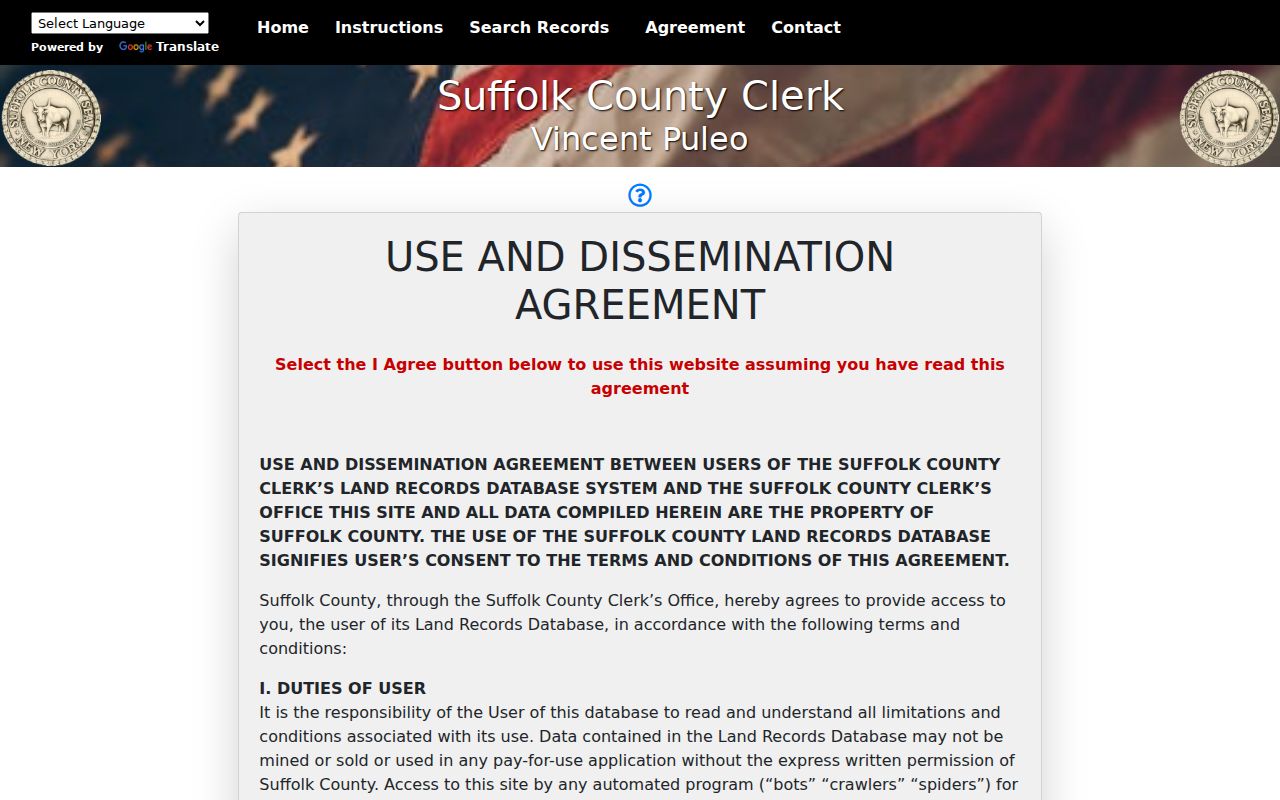
The kiosk notice shows why office visits and copy requests still matter during maintenance or remote-access limits.
Why 1987 Is Not Suffolk's Earliest Deed Year
Online land-document images generally start in 1987. Older Suffolk County deed records are far from gone. The Historic Documents Library describes land records reaching back to about 1660. Begin with the current deed, note its prior liber-page reference, pull that earlier instrument, and repeat. Countywide books cover the oldest period, town-by-town indexes run from 1951 through 1969, and later records shift to public terminals and digital indexes. Visit the Historic Documents Library for the backward search.
The finding aid makes one thing clear: a missing web image is not a missing deed.
Copies, Verification, and Recording Delays
Request plain or certified copies from the Clerk. A missing page reference may mean added work or fees. Many land documents first require RPTSA tax-map verification at $200 per tax lot. New deeds may take eight to ten weeks after closing to record. That lag is normal. It explains why an assessment roll, closing papers, and the newest indexed deed can briefly disagree.
HOWL Monitors Later Suffolk Recordings
Owners who confirm a deed can join the free Homeowners Watch List. Suffolk mails a PIN to the physical property address. Email alerts begin after verification. The system flags new recordings but does not judge whether a document is valid. Enroll through the county's HOWL page.
Condominium enrollment may also depend on the exact SCTM rather than a street address.
Recorded Consideration Is Not a Property Appraisal
A deed and RP-5217 can report consideration. Concessions, related-party transfers, partial interests, and other terms can push that number far from market value. Weigh transfer data against the town assessment and the state SalesWeb, which covers ten years, updates weekly, and can still lag by weeks or months. Certified deed evidence never substitutes for a title examination.
Read Liber, Page, Type, and Recording Date Together
Liber and page pinpoint an instrument within the Clerk's record system. The document type shows what kind of transaction was indexed. The recording date marks when the office accepted it. A deed date printed inside the instrument can be earlier than the recording date. Keep the two dates separate. This matters when reconstructing a closing or lining the deed up with RP-5217 sale data. Result rows are only finding aids. Open the image or order a copy. That lets you read the granting clause, grantee capacity, legal description, reservations, exceptions, and signatures. A similar party name or an adjacent liber page cannot bind a document to the parcel.
Separate Suffolk Deeds from Mortgages and Liens
The kiosk returns separate tables. Each record class carries its own legal function and coverage dates. A mortgage records security for a debt, not a transfer of fee ownership. A satisfaction releases the mortgage it cites. A lien asserts a recorded claim. A lis pendens gives notice tied to litigation. Review each category for title context. Never add a lender or lien claimant to the owner chain of a Suffolk County parcel. Index dates matter here. The lien index reaches back to May 20, 1820. Online lien documents begin July 29, 1990. Lis pendens coverage starts in 1982, with images from 2004. UCC index coverage starts in 1980, with images from 2010. An old index hit may therefore require an office copy rather than a download.
Walk a Suffolk Deed Chain Backward
Start with the newest applicable deed and copy its prior liber-page citation. Retrieve that earlier deed. Confirm the same land through its legal description, then repeat the process. The grantee in an older acquisition usually becomes the grantor in a later conveyance. Marriages, estates, trusts, business entities, corrections, and partial transfers can all break a simple name match. Let the deed records themselves carry the chain.
- Identify the parcel with SCTM and current deed.
- Record grantor, grantee, deed type, dates, and legal description.
- Follow the prior deed citation rather than guessing from a surname.
- Switch to physical books or town-divided indexes when online images end.
- Document every gap and request the underlying record.
When a Suffolk Deed Leads to an Estate
Estate language changes how you read a deed. Words like executor, administrator, heir, or fiduciary tell you the signer acted with court-derived authority rather than selling as an owner of record. Suffolk Surrogate's Court records can shed light on where that authority came from, though the recorded conveyance itself remains the anchor for what actually transferred in the property records. Read the granting clause before assuming anything else.
Do not presume the fiduciary held the parcel personally. Heirs can receive unequal shares, and the deed's legal description governs what moved. Historical genealogy records may supply relationship evidence for a Suffolk County parcel, subject to New York access rules and proof requirements. Tie every conclusion back to the recorded deed itself.
Use HOWL after Confirming a Suffolk Deed
Suffolk County's Homeowners Watch List is known as HOWL. It alerts enrolled owners when a new document hits the deed records. The system mails a PIN to the physical property address before email alerts begin. Owner permission is not required to present a land document for recording. The county warns that an owner might otherwise learn of a questionable filing only at a later sale, refinance, transfer, or foreclosure.
HOWL has real limits, though. It does not block recording, and it does not decide validity. An alert should push you to inspect the indexed document. It should also push you to contact the Clerk or a qualified professional. Condominium owners may need the exact SCTM number if address matching fails.
Know the Limits of Suffolk Deed Records
A recorded deed has boundaries as evidence. It proves the interest its own terms convey, nothing more. It does not guarantee marketable title. It does not clear older liens, fix a surveyed boundary, or reveal every beneficial interest behind a trust or entity. A Suffolk County deed records search can also miss a document still in the recording lag. Index entries sometimes carry errors, so verify the parcel number and names before relying on any single search result.
Title limit. Obtain certified records and professional title review when ownership or encumbrance conclusions will support a transaction or dispute.
Suffolk County Deed Records and What They Show
| Deed Type | What It Does | Common Use |
|---|---|---|
| Warranty deed | ||
| Quitclaim deed | ||
| Grant / special warranty | ||
| Trustee / executor deed | ||
| Tax deed |
The Suffolk County Grantor-Grantee Index
- Grantor
- Grantee
- Chain of title
- Book/Page vs Instrument #
Getting a Copy of a Suffolk County Deed
Recorded, not guaranteed.