
State the Date of a Suffolk Owner Result
Any owner result deserves a date. State when the assessment roll and the deed index were checked, since deeds, parcel splits, and roll updates move through county systems all the time. That small date note keeps a careful finding honest instead of making it sound permanent.
Ask the Suffolk Town Assessor about a Pending Change
A recorded deed can outrun the town roll. When it does, call the assessor for the SCTM district and give the parcel number. Add the recording date, the liber-page or document identifier, and the grantee wording exactly as written. Ask two things. Is an ownership or mailing update pending? Which roll year does the public portal display? The answer comes straight from the office, and a lagging assessment name stops looking like an error.
Use Suffolk's Address-to-Owner Route
Who owns a Suffolk County property? Work from the address to the parcel first. Then move from the parcel to the assessed-owner clue, and from that clue to the newest recorded deed. A mailing name alone is not final proof. Suffolk runs ten town assessors rather than one county assessor, while the County Clerk keeps the recorded land documents. The full SCTM district-section-block-lot number ties those offices together.
Address → tax parcel → assessed owner → newest deed → legal description.
Start in the county OpenGov fields or the right town roll, searching by location address. Save the PIDN and the SCTM. Next, search the Clerk kiosk by tax map number and open the newest deed. Read its grantee, recording date, liber-page reference, and legal description. If the roll and the deed disagree, compare their dates. Then ask the assessor about the update status.
Separate Suffolk Situs, Mailing, and Ownership Names
The situs is simply the physical property address. A mailing name and address show where the tax statement goes. The assessed owner is the name the town assessment roll carries. A deed grantee is whoever receives the recorded interest that instrument describes. These values often match. They can also differ. Each serves a different administrative purpose.
| Field | Useful clue | Required confirmation |
|---|---|---|
| Situs address | Locates the land | SCTM and map polygon |
| Mailing name | Tax-correspondence recipient | Assessed owner and deed |
| Assessed owner | Current roll entry | Newest recorded deed |
| Grantee | Interest received in a deed | Document terms and later filings |
Find the Parcel When a Suffolk Address Fails
An address search can fall short. Try street-name mode in OpenGov, strip out unit text, and compare nearby results. GIS lets you select the correct parcel polygon and copy its ID. A legal description or filed-map reference can resolve roads with alternate names. It can also resolve parcels lacking a standard situs. Condominiums are stricter still. The Clerk requires the exact tax-map number for those. The Clerk will not rely on an address search.
The OpenGov tax-search page displays PIDN, MAP/Parcel, location address, street name, and mailing name fields. See the source represented in this tax-search capture.
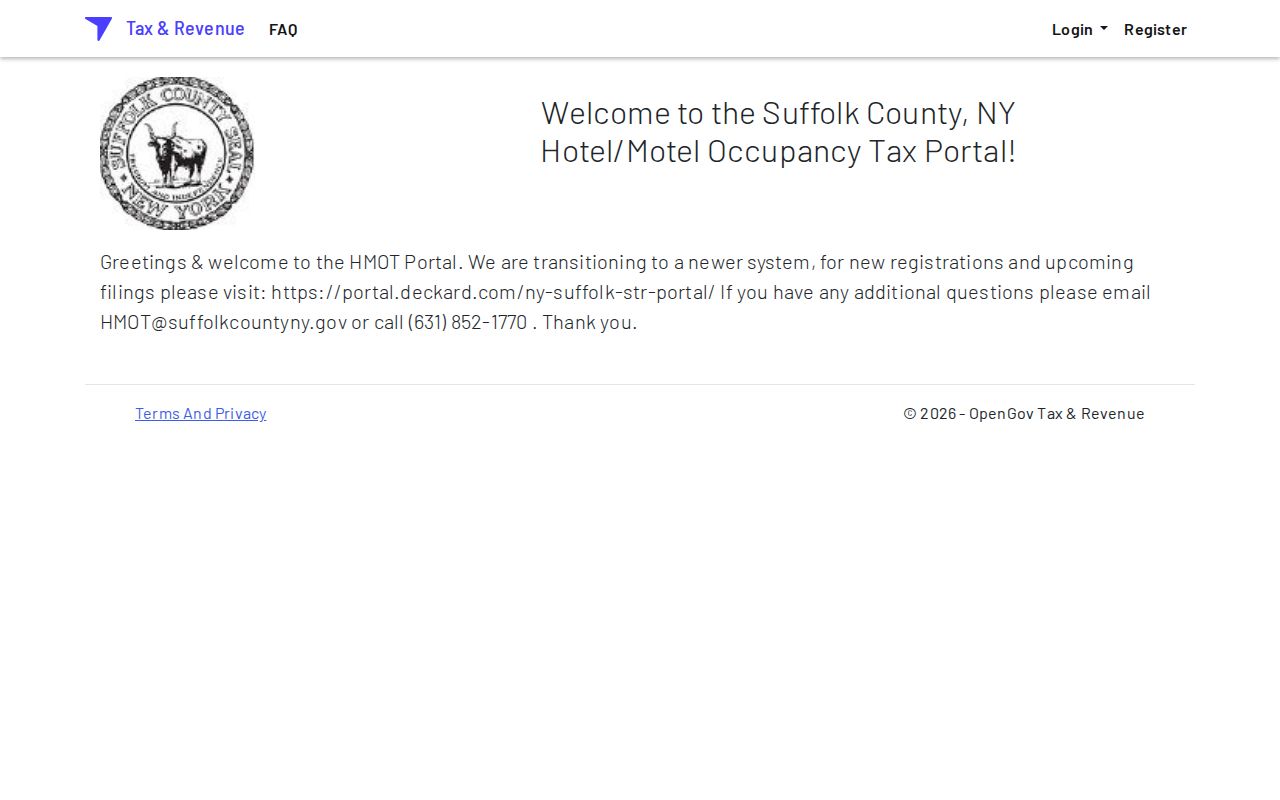
Those separate inputs show why a mailing-name result must be tied back to a location and an exact parcel.
Confirm the Owner in Suffolk County's Newest Deed
Search the SCTM in the Clerk kiosk. Filter deed results away from mortgages, liens, and other categories. Open the most recent plausible transfer. Compare its grantee, recording date, and consideration. Check Schedule A or another legal description against the parcel. Read the document itself. A deed may convey less than the whole fee interest. It can place title in trustees, correct an earlier instrument, or transfer between related parties. Never rely on the result-row label alone.
Review the official source shown in this Clerk kiosk capture.
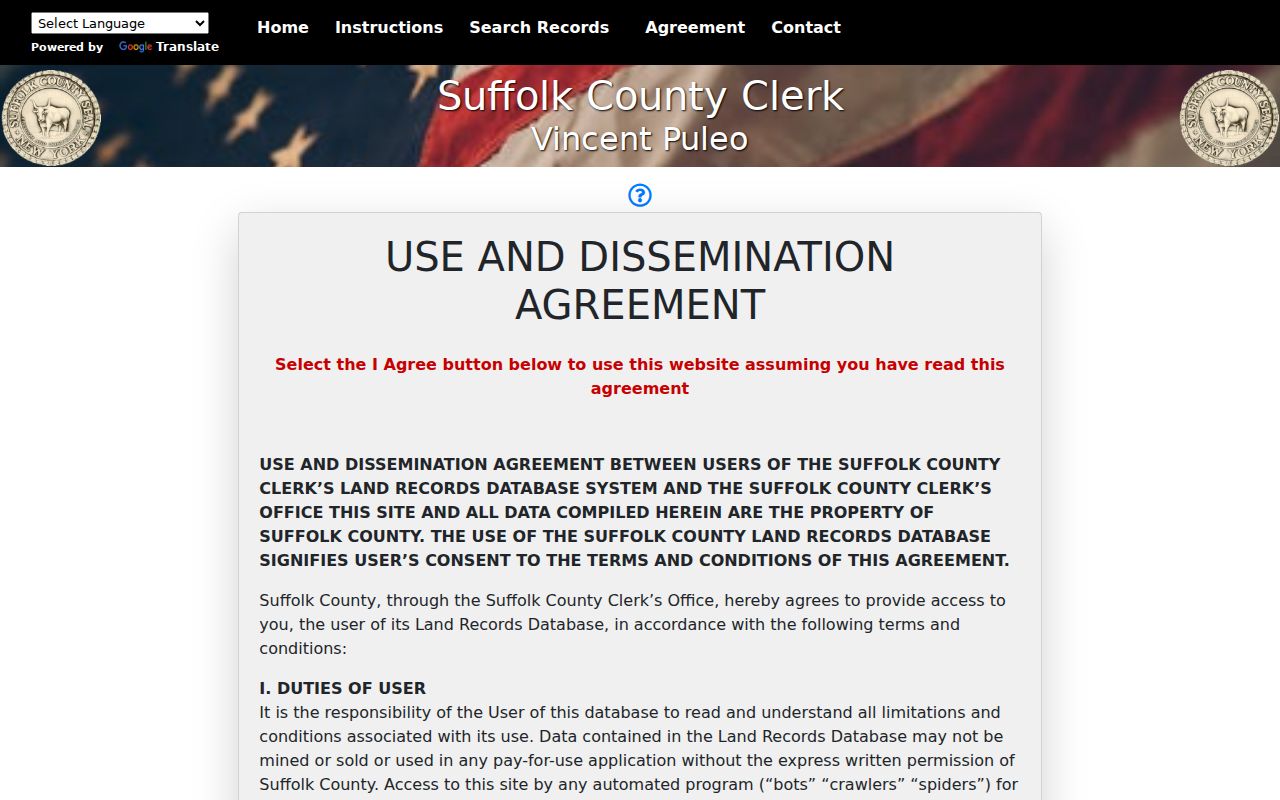
The kiosk offers tax-map, address, party-name, and liber-page routes into the same recorded evidence.
Account for Suffolk's Eight-to-Ten-Week Deed Lag
The County Clerk warns of a recording lag. A new deed may take eight to ten weeks after closing to record. The seller stays on the assessment roll during that gap. The buyer holds closing papers. The public index still shows the prior transfer as newest. Record the access date. Avoid stating more than the sources prove. Check again after the expected recording window passes. The town assessor has no guaranteed refresh schedule. Ask whether a recorded change is pending.
New York SalesWeb can add a reported transfer clue. Its ten-year data can lag weeks or months even though the database updates weekly. A sale date and a deed-recording date are not the same thing. A delayed sales row should not override the actual terms of the recorded deed. A stale tax mailing name should not either. The recorded deed controls.
Interpret LLC, Trust, and Estate Ownership Carefully
An LLC grantee names the entity that took the interest. It does not necessarily name every person behind it. Search the New York corporation and business entity inquiry for public formation details. Go no further than the official files allow, since beneficial ownership may not be disclosed. For a trust, read the trustee capacity and trust wording. For an estate or fiduciary deed, Surrogate's Court records may explain the transfer's authority.
Same-name individuals demand the opposite of guessing. Match the SCTM, situs, legal description, prior liber and page, and the transfer sequence. A tax mailing address can help tell records apart. It is not a safe basis for claiming two names mean one person.
Use Suffolk's Legal Description to Resolve a Match
A Suffolk deed may describe land through metes and bounds, a filed subdivision map, a lot and block, or a prior instrument. Compare that language with the tax parcel and any recorded map. The street address is convenient but rarely controls. One owner name can sit on several parcels. The Schedule A language, map reference, and prior liber-page citation are what distinguish the chain.
RPTSA tax-map verification is required before many land documents are recorded, at a published fee of $200 per tax lot. That step strengthens the parcel reference used for recording. It does not turn the tax map into a survey or a title opinion.
Monitor New Activity with Suffolk HOWL
Suffolk County offers a free Homeowners Watch List, called HOWL, that flags new activity tied to your property records. Once you know the owner of record and parcel number, enrollment is simple. The county mails a PIN letter to the property's street address. After you enter that PIN, email notifications begin. For a condominium whose address will not match, use the exact SCTM instead. An alert only signals that a deed or other recorded document deserves a look. It does not prove fraud. Read the official Homeowners Watch List page from the Suffolk County Clerk.
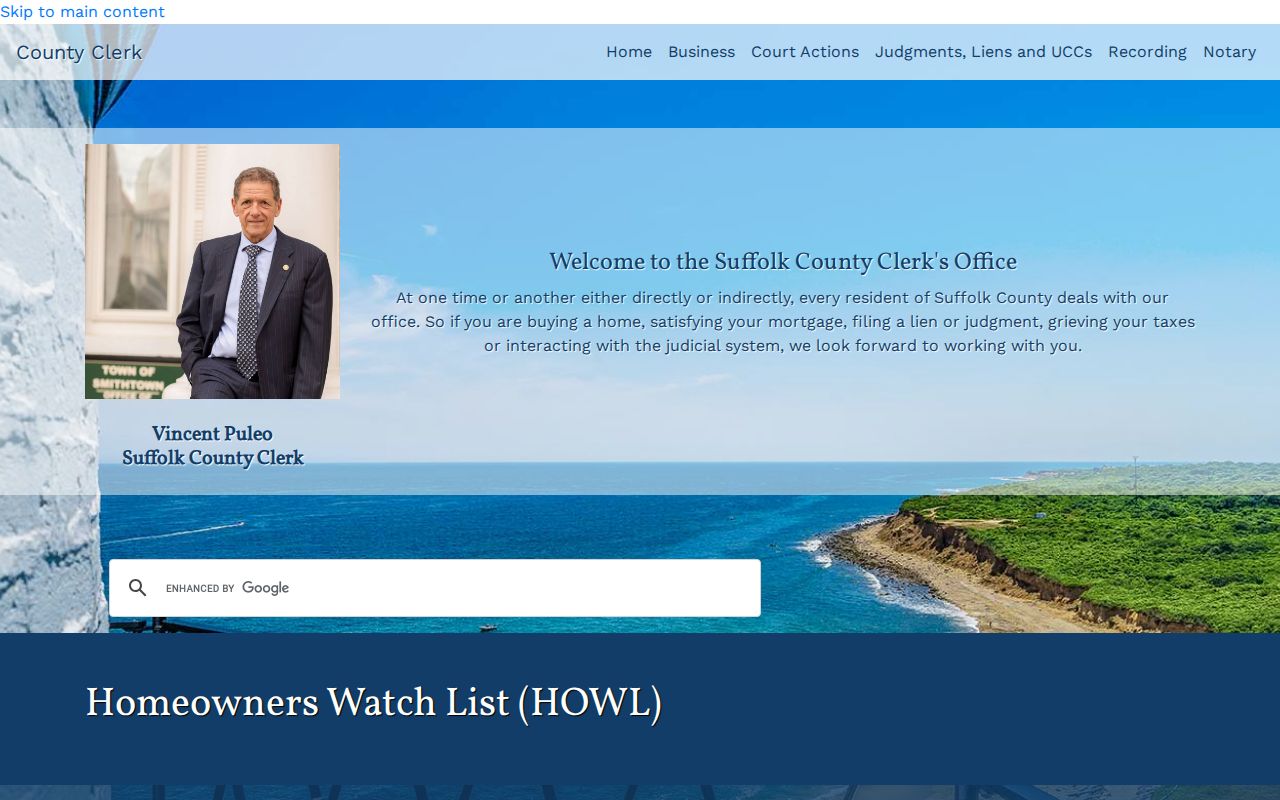
That mailed PIN matters. It ties each enrollment to the physical parcel before any email notices go out.
Know What “Who Owns” Does Not Establish
A careful lookup can support an owner-of-record conclusion as of a stated date. Still, limits apply. Suffolk County property records may not show unrecorded interests. They may not list every beneficiary behind a trust. They may also miss every person behind an entity. Pending documents, actual occupancy, and title defects can also stay hidden. The assessed owner is a tax-roll clue. The newest deed is recorded evidence. Only a professional title search reviews the full chain and its exceptions.
Lawful use. Use owner information for property research and due diligence, and never to stalk, harass, or harm any person.
How to Find Who Owns a Suffolk County Property
- ]
Where Suffolk County Owner Information Comes From
| Source | Owner Info It Gives | Access |
|---|---|---|
| Assessor / tax roll | ||
| Recorder deed index | ||
| Secretary of State | ||
| GIS parcel viewer |
What "Who Owns This Property" Cannot Tell You
Lawful use.